Ir directamente al contenido


Penguin Random House
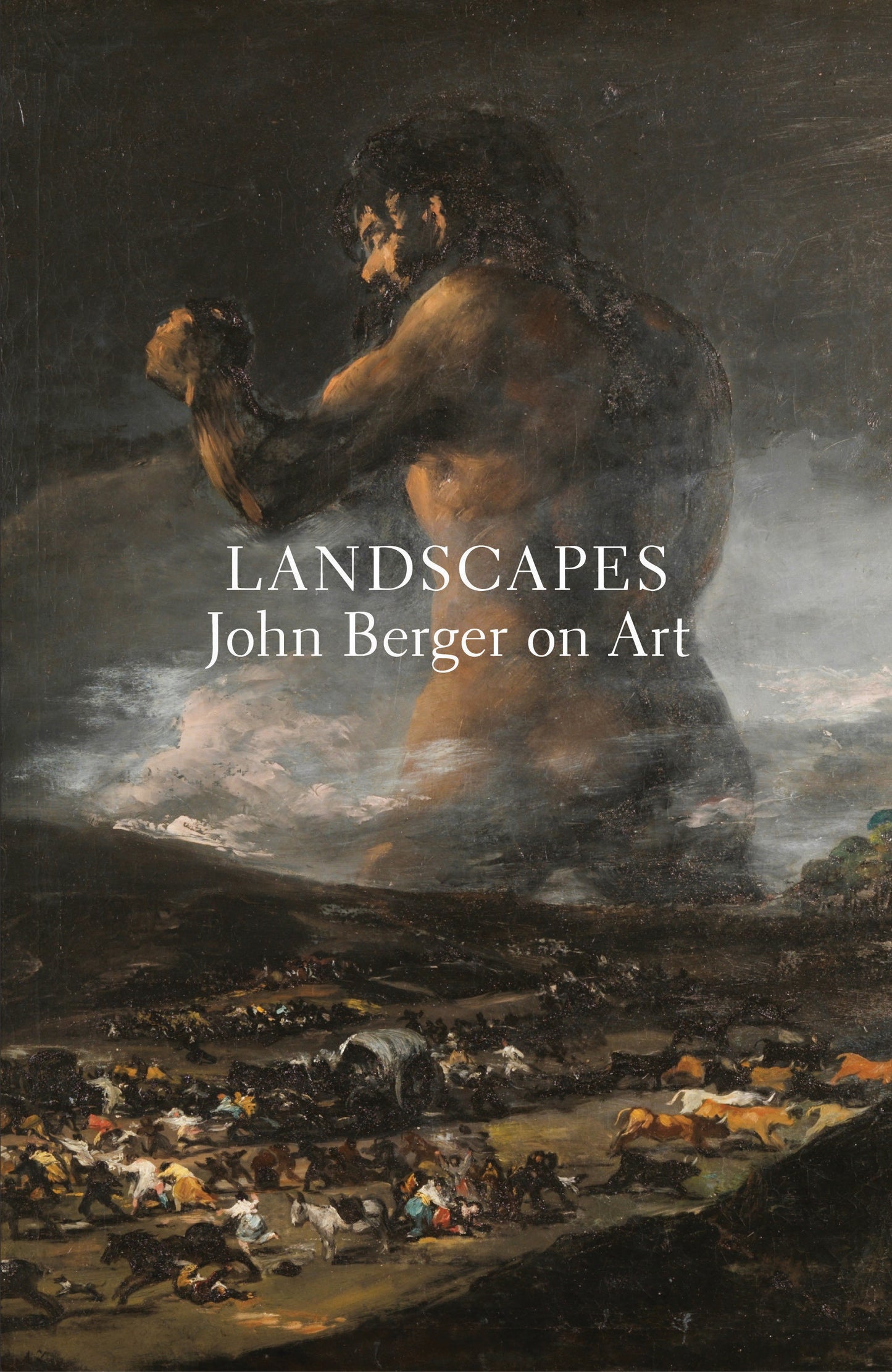
Landscapes - John Berger on Art
Landscapes - John Berger on Art
Precio habitual
$19.95 USD
Precio habitual
Precio de oferta
$19.95 USD
Precio unitario
por
Los gastos de envío se calculan en la pantalla de pago.
No se pudo cargar la disponibilidad de retiro
“Essential reading”—n+1
Creative and political art criticism on landscape works from the Renaissance to the present from a “master” storyteller (Arundhati Roy, author of The God of Small Things)
In this brilliant collection of diverse pieces—essays, short stories, poems, translations—which spans a lifetime’s engagement with art, John Berger reveals how he came to his own unique way of seeing. He pays homage to the writers and thinkers who influenced him, such as Walter Benjamin, Rosa Luxemburg and Bertolt Brecht. His expansive perspective takes in artistic movements and individual artists—from the Renaissance to the present—while never neglecting the social and political context of their creation.
Berger pushes at the limits of art writing, demonstrating beautifully how his artist’s eye makes him a storyteller in these essays, rather than a critic. With “landscape” as an animating, liberating metaphor rather than a rigid definition, this collection surveys the aesthetic landscapes that have informed, challenged and nourished John Berger’s understanding of the world. Landscapes—alongside its companion Portraits—completes a tour through the history of art that will be an intellectual benchmark for many years to come.
Creative and political art criticism on landscape works from the Renaissance to the present from a “master” storyteller (Arundhati Roy, author of The God of Small Things)
In this brilliant collection of diverse pieces—essays, short stories, poems, translations—which spans a lifetime’s engagement with art, John Berger reveals how he came to his own unique way of seeing. He pays homage to the writers and thinkers who influenced him, such as Walter Benjamin, Rosa Luxemburg and Bertolt Brecht. His expansive perspective takes in artistic movements and individual artists—from the Renaissance to the present—while never neglecting the social and political context of their creation.
Berger pushes at the limits of art writing, demonstrating beautifully how his artist’s eye makes him a storyteller in these essays, rather than a critic. With “landscape” as an animating, liberating metaphor rather than a rigid definition, this collection surveys the aesthetic landscapes that have informed, challenged and nourished John Berger’s understanding of the world. Landscapes—alongside its companion Portraits—completes a tour through the history of art that will be an intellectual benchmark for many years to come.