Ir directamente al contenido

Penguin Random House
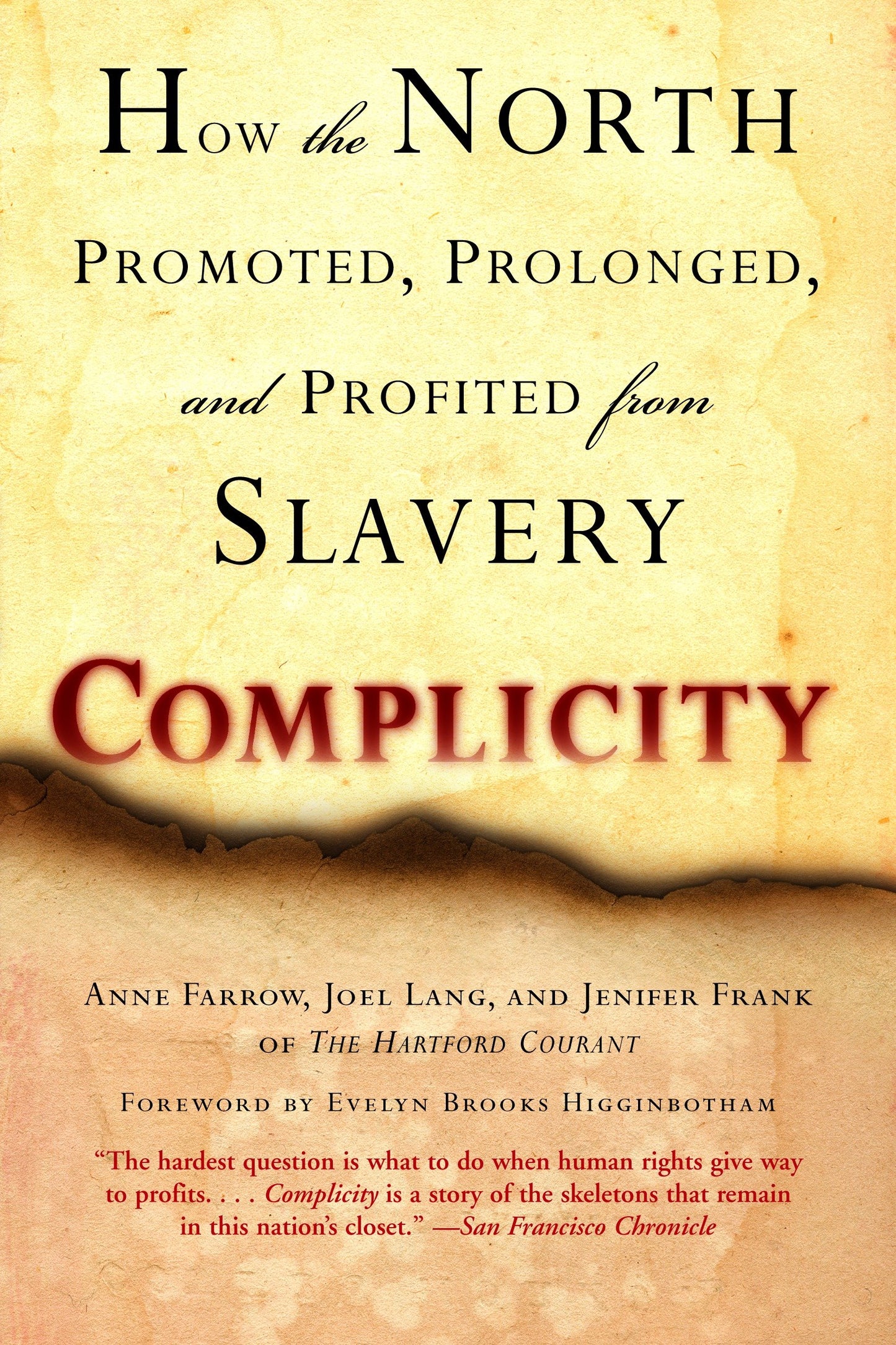
Complicity - How the North Promoted, Prolonged, and Profited from Slavery
Complicity - How the North Promoted, Prolonged, and Profited from Slavery
Precio habitual
$18.00 USD
Precio habitual
Precio de oferta
$18.00 USD
Precio unitario
por
Los gastos de envío se calculan en la pantalla de pago.
No se pudo cargar la disponibilidad de retiro
A startling and superbly researched book demythologizing the North’s role in American slavery
“The hardest question is what to do when human rights give way to profits. . . . Complicity is a story of the skeletons that remain in this nation’s closet.”—San Francisco Chronicle
The North’s profit from—indeed, dependence on—slavery has mostly been a shameful and well-kept secret . . . until now. Complicity reveals the cruel truth about the lucrative Triangle Trade of molasses, rum, and slaves that linked the North to the West Indies and Africa. It also discloses the reality of Northern empires built on tainted profits—run, in some cases, by abolitionists—and exposes the thousand-acre plantations that existed in towns such as Salem, Connecticut. Here, too, are eye-opening accounts of the individuals who profited directly from slavery far from the Mason-Dixon line.
Culled from long-ignored documents and reports—and bolstered by rarely seen photos, publications, maps, and period drawings—Complicity is a fascinating and sobering work that actually does what so many books pretend to do: shed light on America’s past.
“The hardest question is what to do when human rights give way to profits. . . . Complicity is a story of the skeletons that remain in this nation’s closet.”—San Francisco Chronicle
The North’s profit from—indeed, dependence on—slavery has mostly been a shameful and well-kept secret . . . until now. Complicity reveals the cruel truth about the lucrative Triangle Trade of molasses, rum, and slaves that linked the North to the West Indies and Africa. It also discloses the reality of Northern empires built on tainted profits—run, in some cases, by abolitionists—and exposes the thousand-acre plantations that existed in towns such as Salem, Connecticut. Here, too, are eye-opening accounts of the individuals who profited directly from slavery far from the Mason-Dixon line.
Culled from long-ignored documents and reports—and bolstered by rarely seen photos, publications, maps, and period drawings—Complicity is a fascinating and sobering work that actually does what so many books pretend to do: shed light on America’s past.