Ir directamente al contenido


Penguin Random House
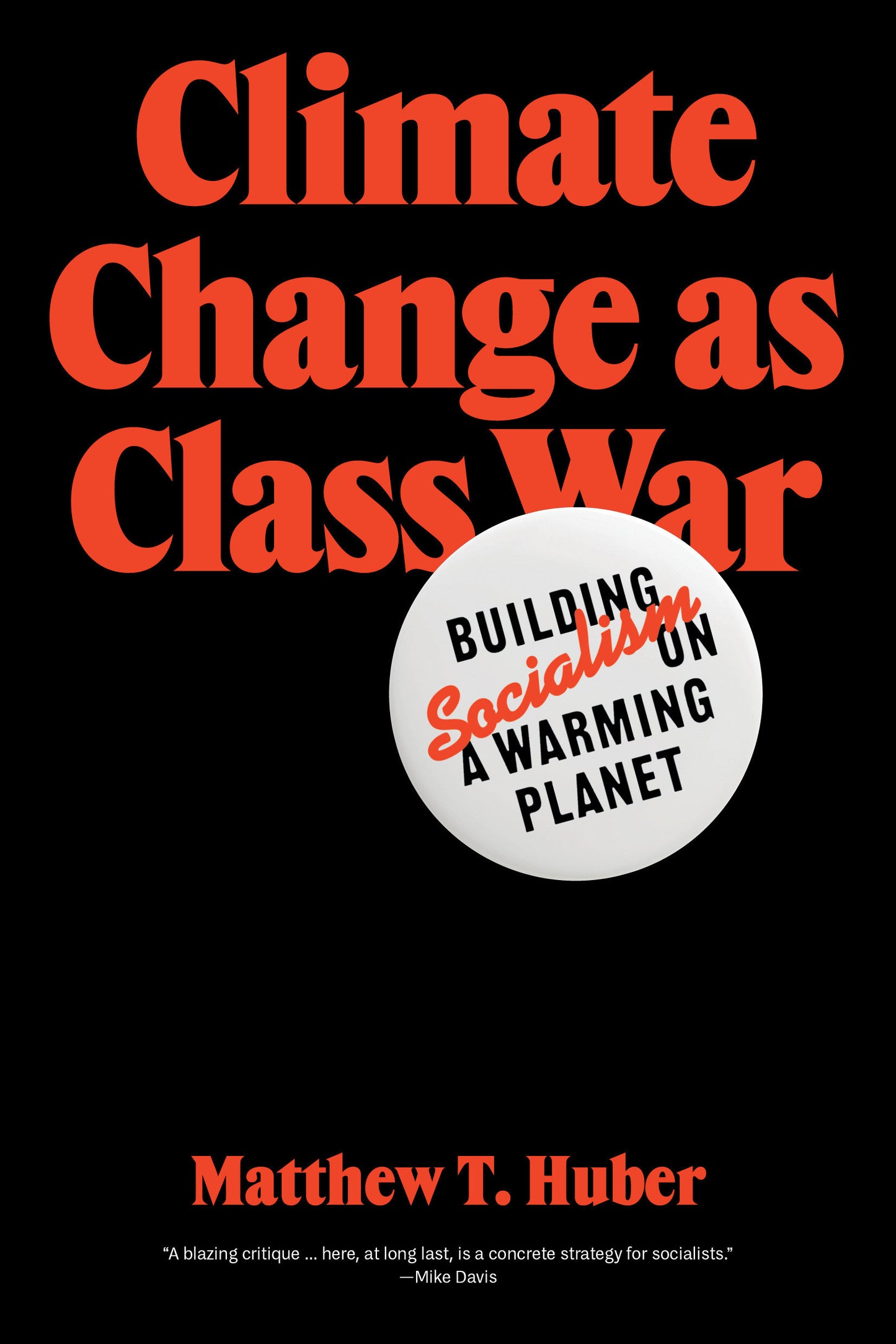
Climate Change as Class War - Building Socialism on a Warming Planet
Climate Change as Class War - Building Socialism on a Warming Planet
Precio habitual
$29.95 USD
Precio habitual
Precio de oferta
$29.95 USD
Precio unitario
por
Los gastos de envío se calculan en la pantalla de pago.
No se pudo cargar la disponibilidad de retiro
How to build a movement to confront climate change
The climate crisis is not primarily a problem of ‘believing science’ or individual ‘carbon footprints’ – it is a class problem rooted in who owns, controls and profits from material production. As such, it will take a class struggle to solve. In this ground breaking class analysis, Matthew T. Huber argues that the carbon-intensive capitalist class must be confronted for producing climate change.
Yet, the narrow and unpopular roots of climate politics in the professional class is not capable of building a movement up to this challenge. For an alternative strategy, he proposes climate politics that appeals to the vast majority of society: the working class. Huber evaluates the Green New Deal as a first attempt to channel working class material and ecological interests and advocates building union power in the very energy system we need to dramatically transform. In the end, as in classical socialist movements of the early 20th Century, winning the climate struggle will need to be internationalist based on a form of planetary working class solidarity.
The climate crisis is not primarily a problem of ‘believing science’ or individual ‘carbon footprints’ – it is a class problem rooted in who owns, controls and profits from material production. As such, it will take a class struggle to solve. In this ground breaking class analysis, Matthew T. Huber argues that the carbon-intensive capitalist class must be confronted for producing climate change.
Yet, the narrow and unpopular roots of climate politics in the professional class is not capable of building a movement up to this challenge. For an alternative strategy, he proposes climate politics that appeals to the vast majority of society: the working class. Huber evaluates the Green New Deal as a first attempt to channel working class material and ecological interests and advocates building union power in the very energy system we need to dramatically transform. In the end, as in classical socialist movements of the early 20th Century, winning the climate struggle will need to be internationalist based on a form of planetary working class solidarity.