Ir directamente al contenido

Penguin Random House
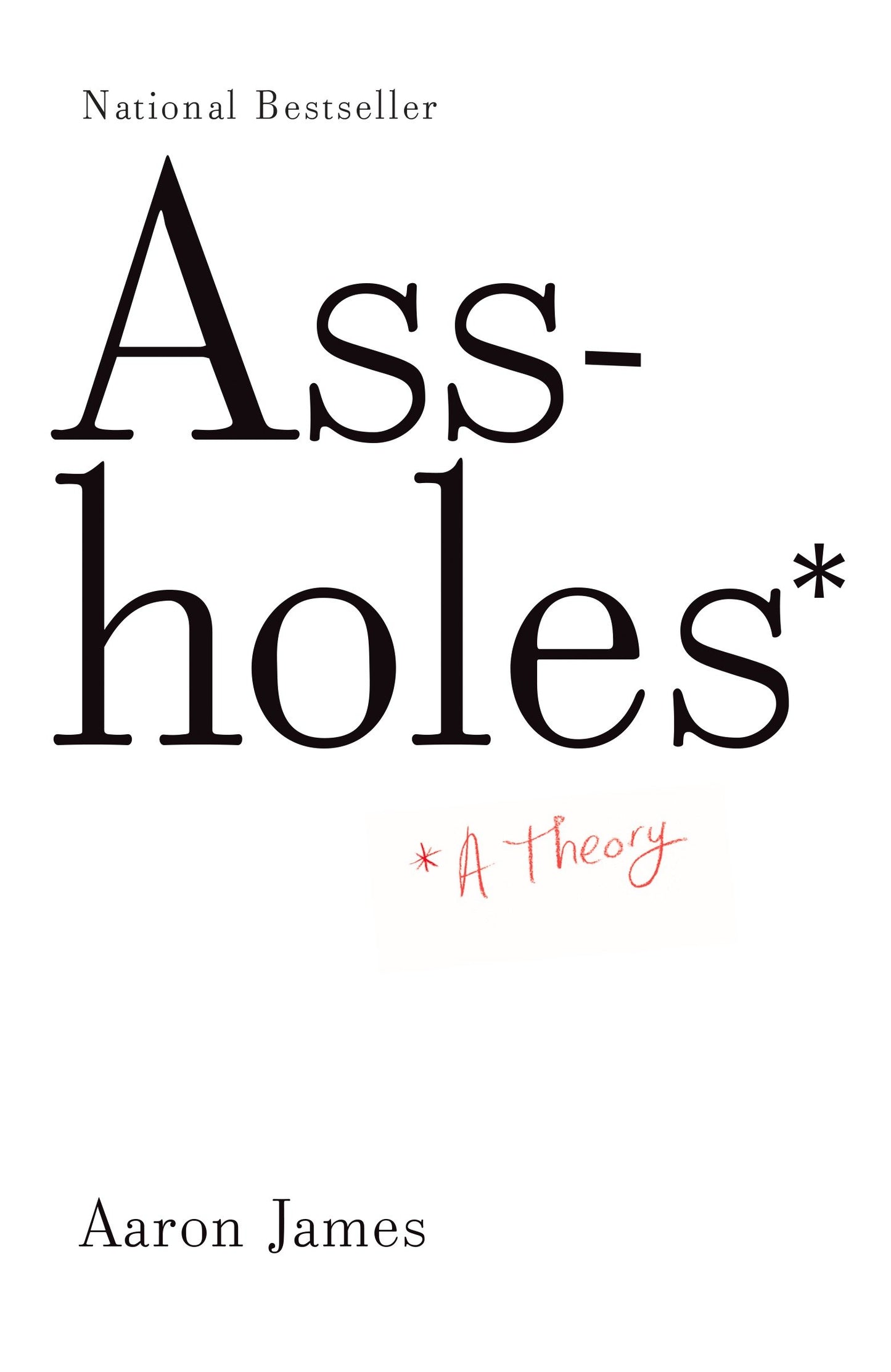
Assholes - A Theory
Assholes - A Theory
Precio habitual
$17.00 USD
Precio habitual
Precio de oferta
$17.00 USD
Precio unitario
por
Los gastos de envío se calculan en la pantalla de pago.
No se pudo cargar la disponibilidad de retiro
The perfect graduation gift for every young adult entering the real world.
In the New York Times bestseller Nick Hornby calls “helpful, stimulating, and very timely” (The Believer), philosopher Aaron James presents a theory of the asshole that is both intellectually provocative and existentially necessary.
What does it mean for someone to be an asshole? The answer is not obvious, despite the fact that we are often personally stuck dealing with people for whom there is no better name. Try as we might to avoid them, assholes are found everywhere and in multiple iterations: smug assholes, royal assholes, the presidential asshole, corporate assholes, reckless assholes. The list goes on.
Asshole management begins with asshole understanding. Much as Machiavelli illuminated political strategy for princes, this book finally gives us the concepts to think or say why assholes disturb us so, and explains why such people seem part of the human social condition, especially in an age of raging narcissism and unbridled capitalism. These concepts are also practically useful, as understanding the asshole we are stuck with helps us think constructively about how to handle problems he (and they are mostly all men) presents. We get a better sense of when the asshole is best resisted, and when he is best ignored—a better sense of what is, and what is not, worth fighting for.
In the New York Times bestseller Nick Hornby calls “helpful, stimulating, and very timely” (The Believer), philosopher Aaron James presents a theory of the asshole that is both intellectually provocative and existentially necessary.
What does it mean for someone to be an asshole? The answer is not obvious, despite the fact that we are often personally stuck dealing with people for whom there is no better name. Try as we might to avoid them, assholes are found everywhere and in multiple iterations: smug assholes, royal assholes, the presidential asshole, corporate assholes, reckless assholes. The list goes on.
Asshole management begins with asshole understanding. Much as Machiavelli illuminated political strategy for princes, this book finally gives us the concepts to think or say why assholes disturb us so, and explains why such people seem part of the human social condition, especially in an age of raging narcissism and unbridled capitalism. These concepts are also practically useful, as understanding the asshole we are stuck with helps us think constructively about how to handle problems he (and they are mostly all men) presents. We get a better sense of when the asshole is best resisted, and when he is best ignored—a better sense of what is, and what is not, worth fighting for.