Ir directamente al contenido


Penguin Random House
A Place for Science and Technology Studies - Observation, Intervention, and Collaboration
A Place for Science and Technology Studies - Observation, Intervention, and Collaboration
Precio habitual
$40.00 USD
Precio habitual
Precio de oferta
$40.00 USD
Precio unitario
por
Los gastos de envío se calculan en la pantalla de pago.
No se pudo cargar la disponibilidad de retiro
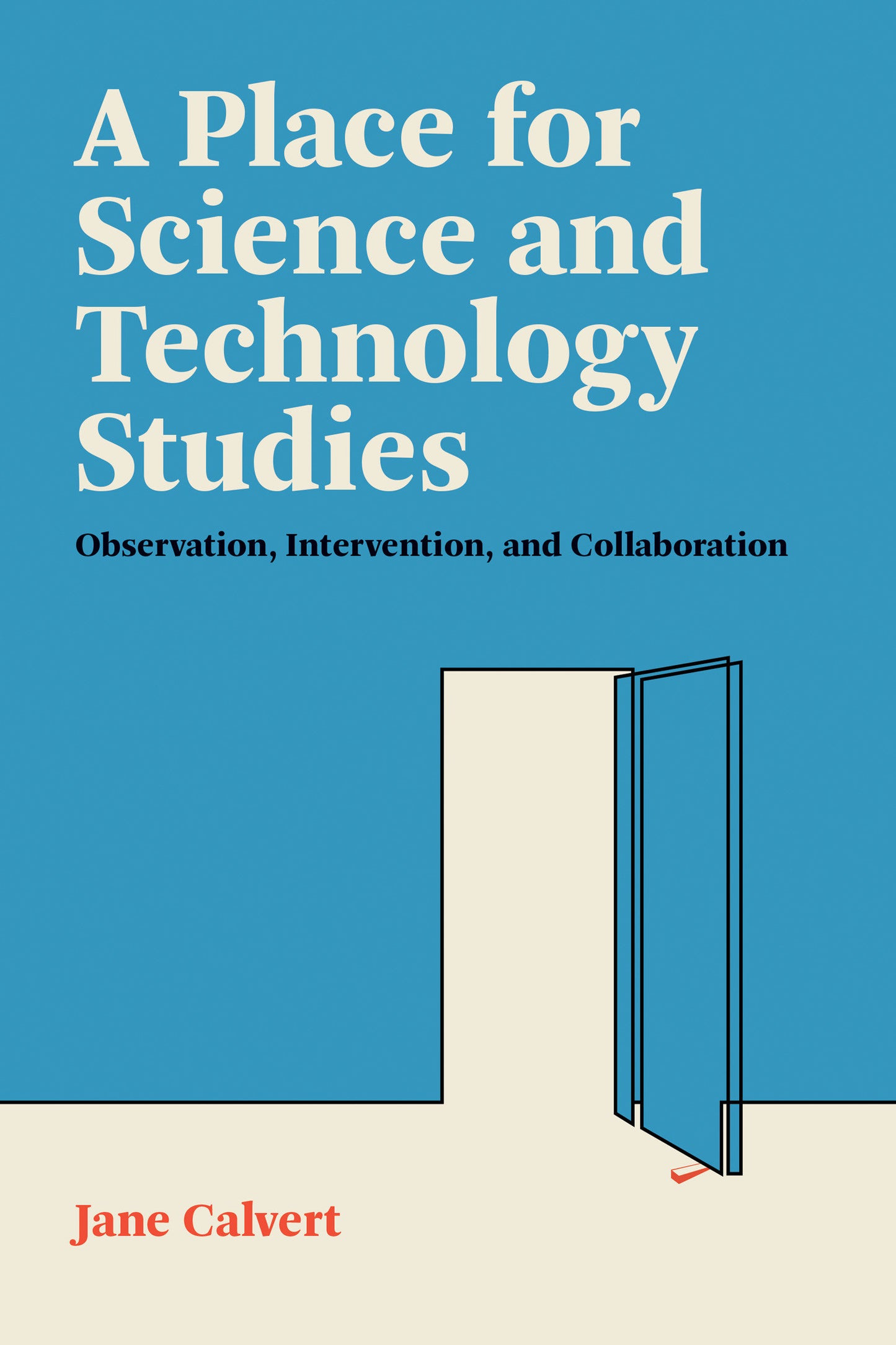
An exploration of science and technology studies in eight different places, and the possibilities that arise for observation, intervention, and collaboration.
Where does science and technology studies (STS) belong? In A Place for Science and Technology Studies, Jane Calvert takes readers through eight different rooms—the laboratory, the conference room, the classroom, the coffee room, the art studio, the bioethics building, the policy room, and the ivory tower—investigating the possibilities and limitations of each for STS research.
Drawing from over a decade of work in synthetic biology, Calvert explores three different orientations for STS—observation, intervention, and collaboration—to ask whether there is a place for STS, which, as an undisciplined field, often finds itself on the periphery of traditional institutions or dependent on more generously funded STEM disciplines. Using examples of failures and successes and tackling enduring concerns about the relations between social scientific researchers and their fields of study, Calvert argues for an approach to STS that is collaborative yet allows for autonomy.
Where does science and technology studies (STS) belong? In A Place for Science and Technology Studies, Jane Calvert takes readers through eight different rooms—the laboratory, the conference room, the classroom, the coffee room, the art studio, the bioethics building, the policy room, and the ivory tower—investigating the possibilities and limitations of each for STS research.
Drawing from over a decade of work in synthetic biology, Calvert explores three different orientations for STS—observation, intervention, and collaboration—to ask whether there is a place for STS, which, as an undisciplined field, often finds itself on the periphery of traditional institutions or dependent on more generously funded STEM disciplines. Using examples of failures and successes and tackling enduring concerns about the relations between social scientific researchers and their fields of study, Calvert argues for an approach to STS that is collaborative yet allows for autonomy.